Friday, 8 May 2015

Major Richard Wells, Krithia and Ross McMullin in Ballarat


Today, May 8th, is the centenary of the charge to Krithia. Where or what is Krithia? people say, when I mention this.  After the ANZAC landings, what came next?  Krithia is one part of what came next.


We’ve been following Major Richard Wells, of the 6th Battalion.  He has tree no. 151 in the Ballarat Avenue of Honour, although he was from Melbourne. His father in law Con Burrow, was an outstanding Ballarat citizen, a very military man, and we suspect it was he who ensured Major Wells was included in the Avenue.


The 6th battalion was part of the brigade called to help assist the British in the assault on Krithia, a strategically placed little village on the Gallipoli Peninsula.  Along with other country Victorian battalions the 5th 7th and 8th, the 6th left bitter fighting in the ANZAC sector and were shipped south.  They were already decimated by the fighting on 400 Plateau and Pine Ridge, but were to face worse yet.


Major Wells, Commanding Officer of C Company, 6th Battalion fell at Krithia.  Ron Austin in his history of the 6th Battalion As rough as bags writes “As the battalion advanced along Central Spur in full view of the Turkish defenders, the enemy fire quickly took its toll.  On the right flank of the Sixth’s advance, C Company, lost its company commander, Major Dick Wells, also Lieutenant Richard Kieran, both mortally wounded.”  Major Wells was evacuated to a hospital ship with gunshot wounds to his throat, and he died on 11th May.


The Krithia story is important to Ballarat because many Ballarat men were included in the 8th Battalion, and  were involved in the battle. The casualties at Krithia were higher than the ANZAC landings.


Tonight at Ballarat Library Ross McMullin will be speaking on this story, focussing on Clunes Mathison, the eminent young medical researcher killed at Krithia.  Mathison is the subject of one of the chapters of Ross McMullin’s award winning book Farewell Dear People.  Ross’ talk is part of Heritage Weekend, and free to attend.  It is 5.45pm for a 6pm start, this evening, May 8th.

Major Wells is the third officer on the left.  From "As Rough as Bags" p.26

Tuesday, 5 May 2015

Sinking of the RMS Lusitania


RMS Lusitania. taken from www.times.co.uk


 May 7th  marks the 100th anniversary of the sinking of RMS Lusitania by German submarine U-20 off the coast of Ireland  killing 1,198 and leaving 761 survivors. While not directly related to Ballarat, the sinking of the Cunard ship was a key event in the early stages of the war.   The sinking turned public opinion in many countries against Germany. It also contributed to the American entry into the war as a large number of the passengers that perished were American.  It also became an iconic symbol in military recruiting campaigns of why the war was being fought.

As Joan Beaumont ponits out although the Lusitania was probably carring contrband, its sinking was seen at the time as a cold-blooded and premeditated outrage, yet another German atrocity.  As a patrriotic Australian wrote on 14 May:

                      Would you have us fight with your own vile tools?
                      If we've no choice we must do the same
                     But we don't  sink boats with civilian crews
                     We leave that to you - tis a cowards game

                     Joan Beaumont Broken nation:Australians in the Great War

To commemorate the anniversary a book has been published which is available through Ballarat Library.  Dead wake: the last crossing of the Lusitania by Erik Larson.


Front page of the Ballarat Star reporting the sinking.  May 10 1915


Painting of the sinking. Taken from www.images.google.com


Recruiting poster used as a result of the sinking.  Taken from www.images.google.com


Saturday, 2 May 2015

ANZAC Landings

Having commemorated the 100th anniversary of the landings last weekend this post will look at how the landings were reported in the local press in 1915.  It did not take long for the landings to be reported. The first stories appearing in the Ballarat Courier on the 29th April.  The reports were heavily censored for domestic consumption by British Officials.  The reports stated how enemy attacks was being repulsed and the Allies were pushing forward.  No mention of the heavy casualties being taken.  No doubt people reading these  reports in Ballarat in 1915 were left with the impression that their boys would be home for Christmas and that everything was going wonderfully well.. This sense of optimism would soon be dashed when the casualty lists would start appearing  in the paper within a couple of weeks.   Following is the initial report of the landings in the Ballarat Courier.


Ballarat Courier April 29th  1915


Map of the landings on the 25th April 1915.  Taken from www. gallipoli.com.au


The real tragedy of what was taking place came from the letters sent home to loved ones from Gallipoli. They told a completely different story.  As well journalists like Ellis Ashmead-Bartlett, Charles Bean and later Keith Murdoch  would write about the difficult conditions the ANZACS were facing. One thing all them reported  was how gallant the ANZACS were considering the hugh obstacles they were encountering.. Following is an excerpt taken from a letter sent home to loved ones from then Capt Leslie Morshead, later to become Lieutenant-General Sir Leslie Morshead, one of Ballarat's finest citizens.

           This is the first letterI have attempted since our memorable and awful landing on Sunday 25th April.  I have even neglected my diary. But i shall never need a diary to remind me of what i went through or what i saw. No pen could describe that Sunday or Tuesday.  It was a grim hard fight.  On Thursday we were relieved, and when our roll was called we had considerably less than half a battalion.   It was a sorry spectacle to see all the men there, hungry, dirty, unshaven, bitter. (Taken from Dinkum Oil: letters published in the Ballarat Courier during the Great War by A.M. Taylor. avaiable in the Australiana Research Room, Ballarat Library)


Friday, 24 April 2015

ANZAC eve

April 24th.

 
 Diary entries


 Captain Percy Lay, 8th Battalion, from Ballan

April 23 : Practiced disembarking and our Colonel told us we were likely to get a lively time landing, within the next couple of days

April 24 : Got ready to move off and sailed in the afternoon and anchored just off Imbros Island. Everything is ready for the landing.


Albert Coates (later Sir), 7th Battalion, from Ballarat

April 24 : Things are moving this morning as we are told that we are to leave for the firing lines at 10am.  At 11am we leave Lemnos and pass many ships on our way out.  The "Queen Elizabeth" with her decks cleared for action is ready to move up the Bay to cover our landing.  There are 40 war boats in the bay ready to leave with us.  We reach the small bay near the mainland at 5pm and anchor there for the night.


Bandsman Harold Krutli, 14th Battalion (late of Maryborough, Victoria)

April 24 :  We left for the seat of war at 10 am.  It was a beautiful clear and calm morning and it was very hard to believe that one was going to what perhaps would be his last few days on this earth.


*


The men this blog is following are from the 6th, 7th and 8th Battalions.  They are on the transports facing the Gallipoli Peninsula, and are as prepared as they can be for the dawn landings.  Except no one was prepared, on either side, for what came next.


*


LEST WE FORGET

ANZAC 1915 - 2015

*


Friday, 17 April 2015

Reuben Mitchell

When we last posted an entry about Reuben he was aboard the AE2 on his way to Alexandria as part of the second convoy. With the Dardanelles landings due to commence in a little over a weeks time it might be worthwhile to post another entry for Reuben to see what he has been doing up to this point of the war.  Reuben is on temporary transfer aboard the repair ship Penguin when the AE2 became the first allied submarine  to breech the Dardanelles Strait in April 1915.  On 30 April  the submarine  was scuttled off the coast of Turkey and her entire crew taken prisoner of war. As a result of this Reuben was transferred to serve aboard British submarines. In a letter sent home to his parents he mentions his transfer.

                                 'I left the submarine ten days before she left Malta, and came up here in a merchant ship, only to hear of her fate when I arrived. It was the first trip I have missed in her since she was commissioned , so I suppose I may consider myself lucky. I would have told you all about it in my last letter , but it had not been announced officially.' (extract taken from Dinkum Oil : letters published in the Ballarat Courier during the Great War. by A. M.Taylor, available in Australiana Research Room, Ballarat Library.)

 The Ballarat Courier also published another letter Reuben sent home describing life on board the submarine AE2   This letter, obviously written prior to the letter written above,  could quite possibly be the letter he mentions in the above extract. The letter is reproduced below. 
Ballarat Courier 14 April 1915  

Friday, 10 April 2015

ANZAC Centenary online

By chance this morning I heard on Radio National Breakfast a segment on the Australian submarine the AE2.  Troops landing on the beaches at Anzac Cove is the iconic image of the Gallipoli campaign, but there was also an underwater story. You can listen to the segment here : how the AE2 was the first submarine to penetrate the Dardanelles defences and eluded capture for almost a week.  

The Royal Australian Navy features the AE2 story, and there is also an AE2 Commemorative Foundation.  One of the servicemen of the Great War which this blog is following is A.S. Reuben Mitchell, who served on the AE2 and later the E14. We introduced him in our blog of 23 November 2014.

There are now many blogs, facebook pages and websites all concentrating on the ANZAC centenary and the men and women who took part in the Great War.  

Something that came to our attention today are two Facebook pages dedicated to former Ballarat citizens who went to the War - Sister Alice Ross-King, born in Ballarat but later of Melbourne, and Bert Reynolds, originally from Sebastopol.  These Facebook pages are entering diary entries making their posts part of #AnzacLive - try using that hashtag on Twitter or Instagram or Facebook for other interesting posts.

Another blog of interest is that of James Greenbank's ANZAC story  created by Carin Greenbank in honour of her great uncle, originally from Snake Valley.  Carin has created a wonderful blog, quite simple and short, and it's an example of what can be done with research results.  It can be an effort to produce a book but creating a blog or a Facebook page is an excellent and simple way to publish research. 

Happy online searching! There is so much to follow and read.  But if you'd prefer a book, we have a copy of Stoker's Submarine by Fred and Elizabeth Brenchley, in the Australiana Room.

An illustration by Simon Dance of the Dardanelles offensive, from Stoker's Submarine


Thursday, 2 April 2015

Good Friday, 1915 - 'First Battle of the Wozzer'


Is that battle title unfamiliar?


On Good Friday, 1915, after the special Church Parade, the men were given leave to visit Cairo.  The time is drawing near for the troops to leave, and perhaps this is the last chance to visit.


There has been bitterness between some of the Australians and New Zealanders, and the Egyptians, for some time – relating to the bad drink served by local liquor traders, to a steep rise in price in the brothels, and by the many cases of venereal disease.  There was a crowd of soldiers in the brothel street of Haret el Wasser, and some of them decided to exact retribution for the insult and injury they believed they or their mates had incurred during the time the troops were in Cairo.


Percy Lay’s diary for April 2 notes  … there was a great row in Cairo. Someone set fire to the Waizizau. The best part of the place burnt to the ground. It ended up in a stoush between our chaps and the Red Caps [British Military Police]. Things were pretty lively while they lasted.


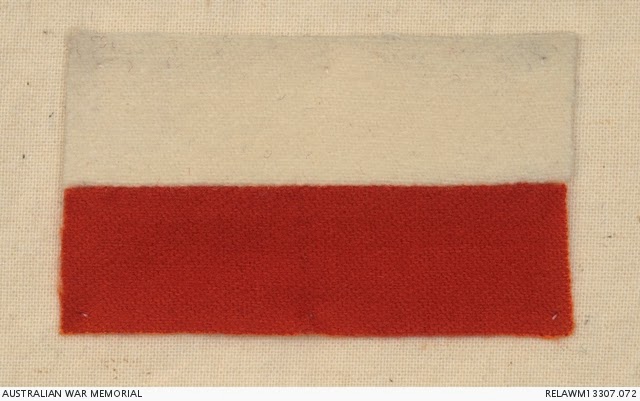
Sister Alice Kitchen was also in Cairo on that Good Friday.  She experienced some of the Wozzer disturbance, but also noticed something else: “the soldiers are now branded well by having stripes on their hats and sleeves. ‘Ours’ [the 8th battalion] red and white, others green and white, red and blue, blue and white…’ These are the colour patches, a new device to help distinguish the various units – the 8th Battalion’s colour patch White over Red instantly became known as ‘Blood and Bandages’.


Colour patch of the 8th Battalion, raised in country Victoria and including many Ballarat men


C.E.W. Bean, in his official history of the war, almost ignores the First Battle of the Wozzer, relegating it to a footnote, and concentrates instead on the momentous news just received in camp. The Australian Division was ordered to the front.


Percy Lay’s diary, April 3: Got word to say we were to leave for Alexandria and then embark for some unknown place where we were likely to have some fighting.


References for today’s blog – and further reading if you are interested in these events 100 years ago; all are available in the Australiana Research Room at Ballarat Library, and there are also lending copies in the main collection.


Adam-Smith, Patsy   The ANZACs

Austin, R.  Cobbers in khaki; the history of the 8th battalion 1914-1918

Bean, C.E.W.  Official history of Australia in the war of 1914-1918 Vol. 1, the story of ANZAC

Turner, J.L. (ed.)   The war diaries of Captain Percy Lay (1914-1919)